Automatic Printing Machine Manufacturer


Printing Machine for cosmetic package
Application, Importance, Cases, Sample Illustrations and Development Prospect of Screen Printing & Hot Stamping in Cosmetic Packaging
Screen printing and hot stamping are two core decorative printing machine for cosmetic package industry. They are often combined to enhance the appearance, premium feel and market competitiveness of beauty products, becoming the standard process for mid-to-high-end cosmetic packaging worldwide.

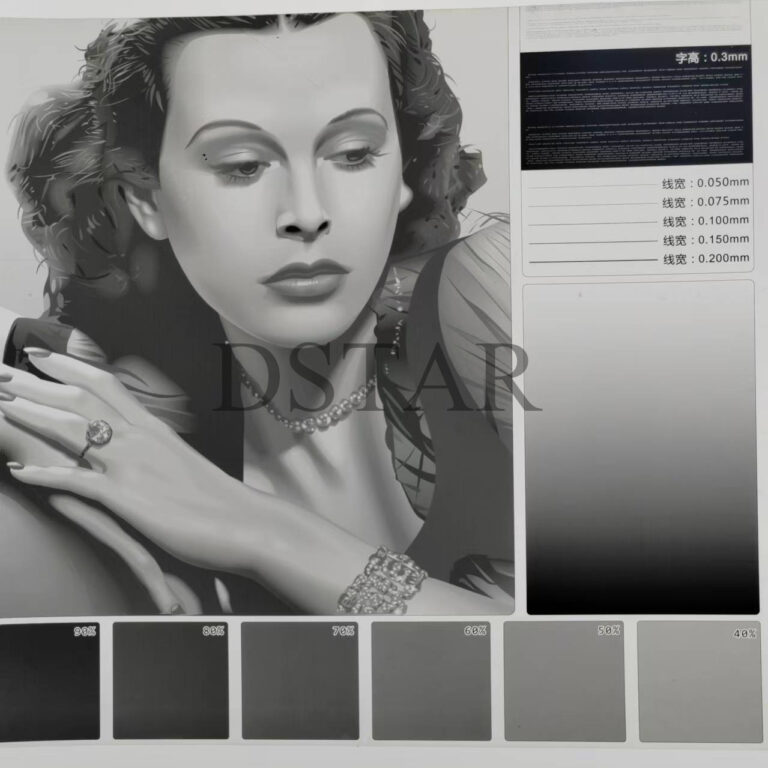
Screen printing transfers ink onto packaging surfaces through a mesh stencil. It features a thick ink layer (20–30μm), strong three-dimensional sense and high color saturation. It is highly adaptable to curved or irregular substrates such as glass bottles, plastic containers, acrylic, metal caps, lipstick tubes, cosmetic hoses and gift boxes. It can achieve matte, frosted, solid color, gradient and personalized pattern effects, ideal for large-area background printing, brand logo and pattern printing.
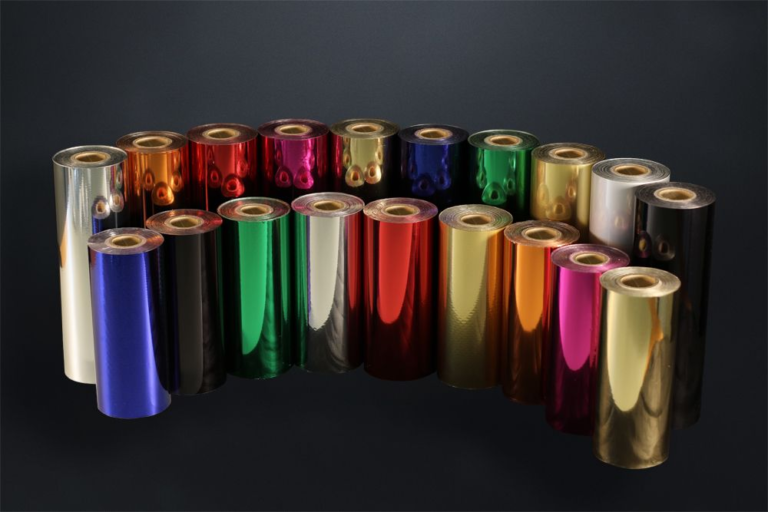
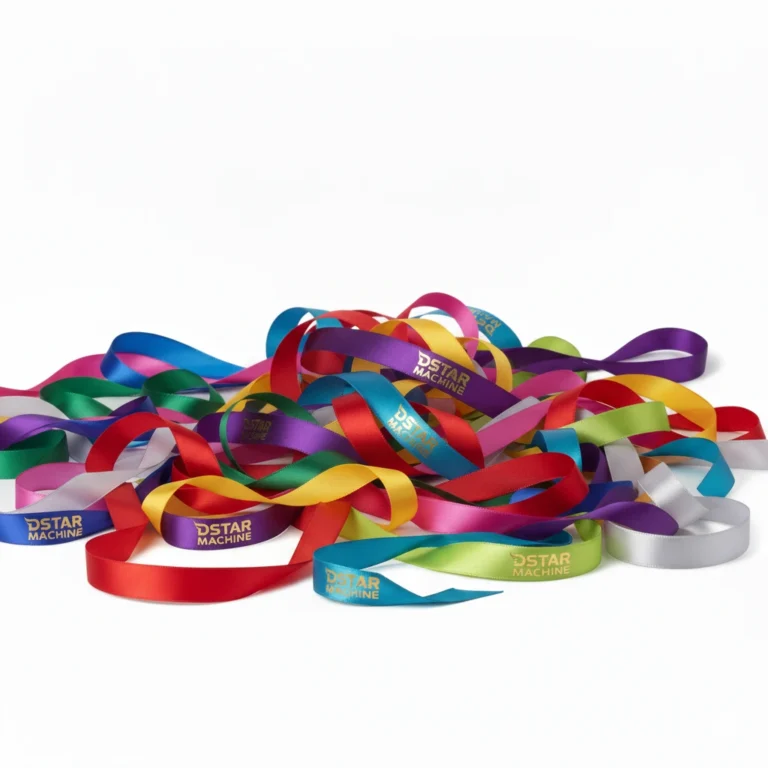
Hot stamping (foil stamping) uses high temperature and pressure to transfer anodized aluminum foil to the packaging surface, presenting luxurious metallic finishes such as mirror gold, matte gold, laser silver, colorful holographic and brushed metal. The hot stamping effect is exquisite with clear edges, excellent wear resistance and color fastness, which is indispensable for enhancing the luxury sense of cosmetic packaging. In actual production, screen printing is usually used for background color and large-area pattern laying, while hot stamping is for border decoration, brand letters and local embellishment. The combination of the two has become the mainstream choice for premium beauty packaging.
First, it enhances brand premium and high-end positioning. Cosmetics are typical appearance-driven consumer products. The thick texture of screen printing and the metallic luster of hot stamping create an obvious visual gap between affordable and luxury products, effectively strengthening brand value and market positioning.
Second, it adapts to all categories of cosmetic packaging materials. The two processes can process perfume bottles, essence glass bottles, PET/PP plastic bottles, eye cream jars, lipstick tubes, mascara tubes, eyeshadow palettes, paper boxes and gift sets, covering almost all beauty packaging materials.
Third, it offers flexible customization and process compatibility. It supports single/multi-color screen printing, full-page/partial hot stamping, hollow/embossed hot stamping, meeting the needs of niche customization, multi-SKU small-batch production and large-scale mass production.
Fourth, it ensures durability and meets circulation standards. UV-cured screen printing and anodized aluminum hot stamping resist friction, alcohol wiping and chemical corrosion from cosmetics. Patterns remain intact during long-distance transportation and daily use.
Fifth, it strengthens shelf appeal and conversion rate. In supermarkets, duty-free shops and e-commerce pages, cosmetic packaging with screen printing and hot stamping is more eye-catching, significantly improving consumers’ purchase intention and product conversion rate.
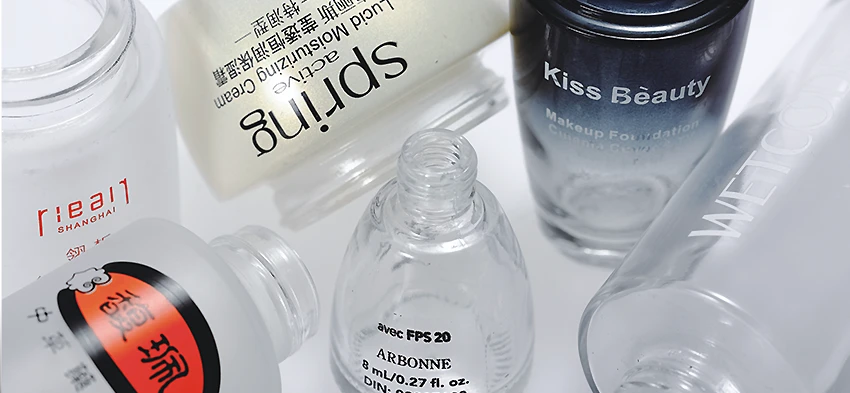
Case 1: Luxury Perfume & Skincare Glass Bottles
Application: Color screen printing for brand logos, product names and plant patterns on bottle bodies; matte gold hot stamping for ring borders on bottle necks/bodies and logos on caps.
Effect: The combination of transparent glass and metallic luster creates a light luxury and high-end feel, which is the mainstream process for international luxury perfume and essence brands.
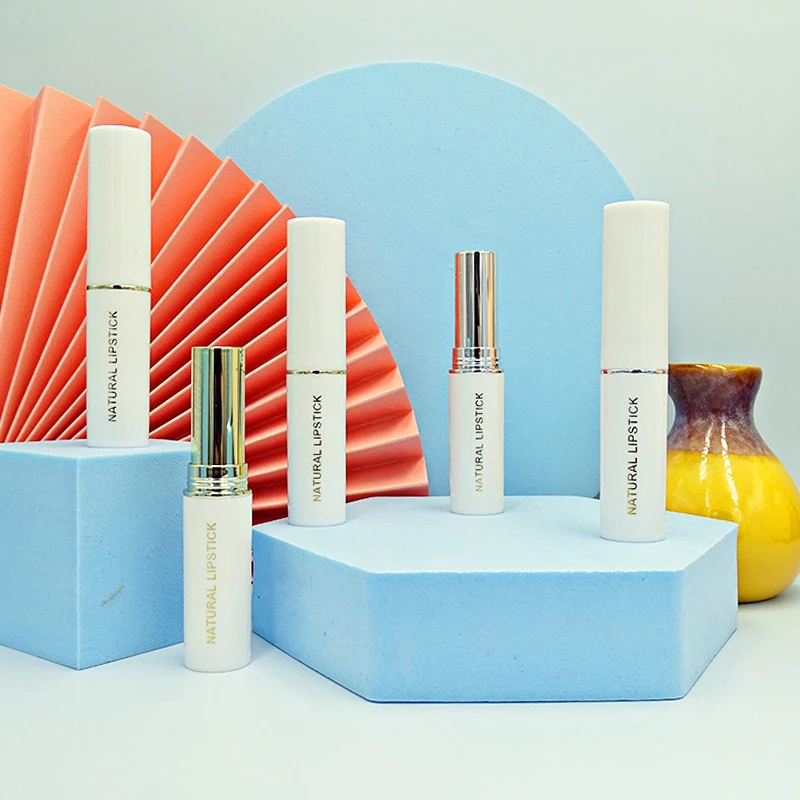
Case 2: Lipstick Tubes & Color Cosmetic Tubes
Application: Solid-color screen printing for tube body base; laser hot stamping for brand logos/color codes and thin line embellishments on top.
Effect: Perfect fitting on curved surfaces, clear tiny characters and sharp hot stamping edges, suitable for rapid launch of multiple shades in color cosmetics.
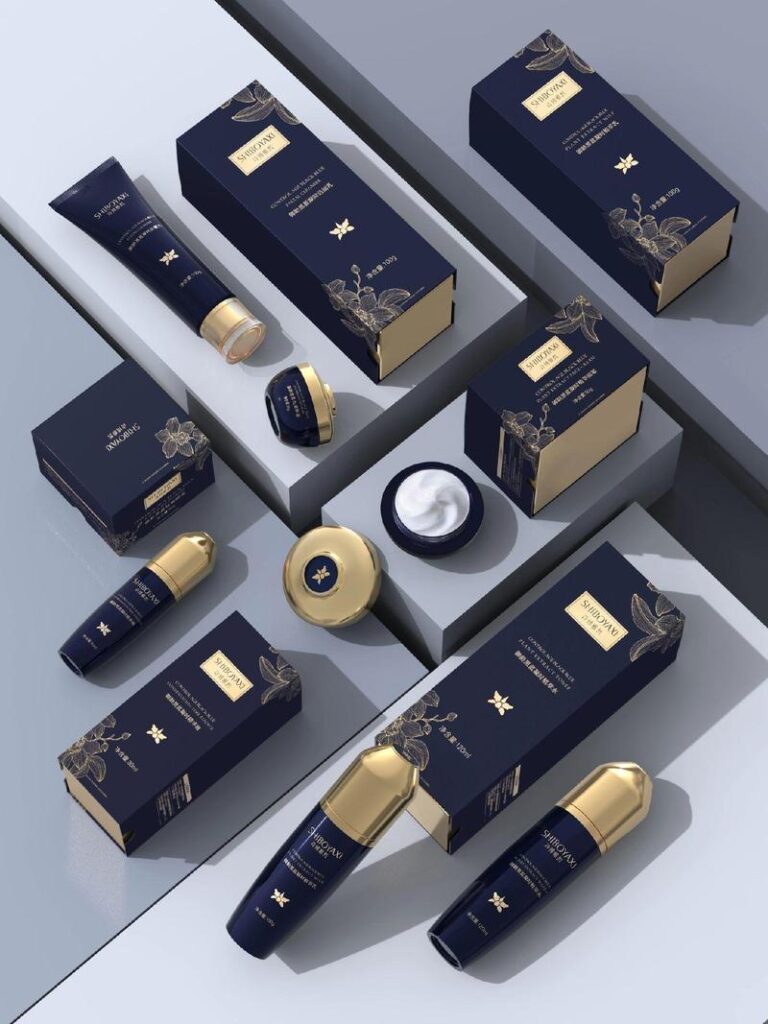
Case 3: Cosmetic Gift Boxes & Sets
Application: Large-area matte black/Morandi color screen printing for box backgrounds; large-area gold/colorful holographic hot stamping for logos, patterns and edge seals.
Effect: Strong contrast between matte background and metallic reflection, enhancing gift-giving value, widely used in holiday limited editions and sets.
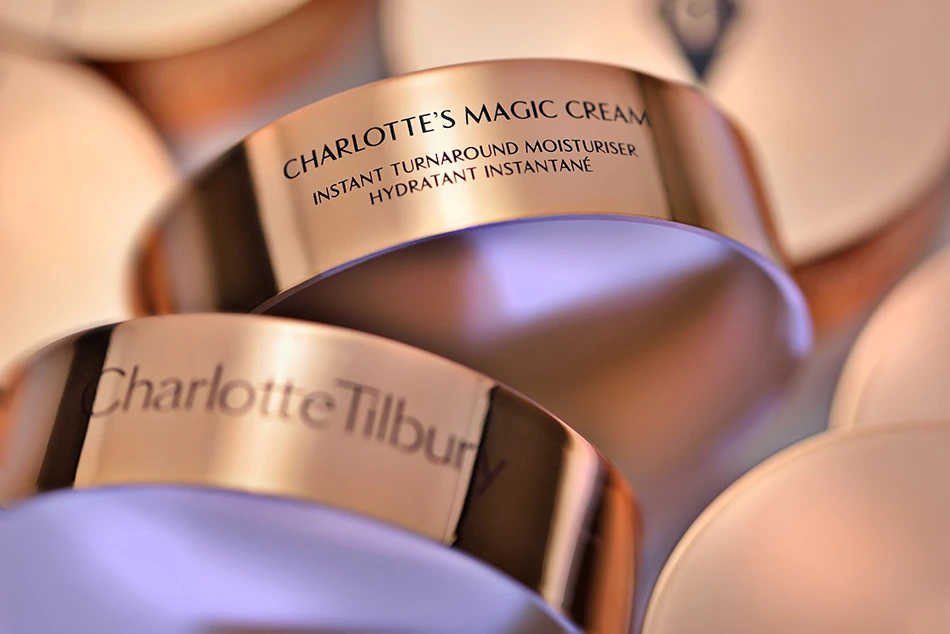
Case 4: Lotion Pumps, Cream Caps & Metal Color Cosmetic Caps
Application: Small-area screen printing for identifiers on caps; precise hot stamping for 0.1mm-level thin lines on edges.
Effect: High precision for small sizes, clear tiny characters, enhancing detailed texture for high-end skincare and color cosmetic small parts.
Development Prospect
The global cosmetic market continues to grow, with the rise of Chinese domestic brands and cross-border e-commerce. Premiumization, personalization and sustainability have become core trends. Screen printing and hot stamping, as key decorative processes, will maintain steady growth driven by the following factors:
Growth of niche customization: The increase of niche color cosmetics, Internet celebrity bestsellers and customized fragrance brands drives strong demand for small-batch, fast-delivery and customized solutions, which screen printing and hot stamping perfectly match with short sampling cycle and controllable cost.
Strong demand from premiumization: Beauty brands are upgrading from affordable to mid-to-high-end, and packaging has become a core carrier of brand value. Screen printing and hot stamping have become standard configuration for differentiation, with continuous growth in market demand.
Integration of composite processes: The combination of screen printing, hot stamping, UV embossing and reverse frosted processes will become mainstream, realizing dual high-end experience of touch and vision, replacing single printing methods.
Environmental upgrading: Water-based screen printing inks, solvent-free UV inks and eco-friendly anodized aluminum foils are widely used, complying with European and American regulations and FDA standards, supporting export foreign trade business.
Automation reduces costs and improves efficiency: Fully automatic curved screen printers and continuous hot stamping lines are popularized, solving the problems of small-batch multi-variety and high-precision registration, reducing labor costs and increasing yield.